CBSE Class 10 Social Science Paper Analysis Shows Balanced Paper with Moderate Difficulty
The CBSE board exam 2024 began for both Classes 10 and 12 on February 15 and the Class 10 Social Science paper was held on March 7. Students said that the Social Science paper was of easy to moderate level in difficulty.
The paper was easier compared to last year’s and the sample papers. Most students found the mapping section easy. However, some felt the case study questions were a bit tough.
The exam wasn’t too long, and most questions were from the NCERT.
“The exam was easy and everything was from the syllabus. Questions were repeated from last year’s paper and sample paper. Maps section was extremely easy. It was from the sample paper,” says Aditya from Cambridge School, Noida.
Aman Sharma from the same school found the paper a little tough. He clarified that it was cause of his preparation level as the paper was easier than that of last year and the sample paper.
“The 5-mark questions and case studies were difficult,” Yadhvi from Bal Bharti Public School says, adding that the paper was tougher than the sample paper and last year’s paper.
Karthik Sharma from Cambridge School says that his exam went really well but that the paper wasn’t easier than that of last year.
WHAT TEACHERS HAVE TO SAY
“The question paper was as per the syllabus and the difficulty level of the question paper was easy and comforting. A few multiple-choice questions (MCQs) were challenging, but the rest were simple and accommodating,” says Manisha Pundir, Subject Coordinator at VidyaGyan Sitapur.
“Some questions based on the G20 summit were expected as per the learning objectives of Chapter ‘Globalisation and Indian Economy’, but somehow, they were totally excluded from the paper. Case-based questions had answers in the provided paragraphs. Internal choices were provided,” she says.
“Though some questions necessitated in-depth concept grasps, most of the subjective questions were also straightforward, well-placed and maintained the equilibrium,” she adds.
“It was not lengthy, and students got enough time to revise before submissions of answer scripts. To sum up, the question paper was balanced and reassuring,” the teacher adds.
“The CBSE Class 10 Social Science paper offered a balanced mix of questions, testing knowledge, analysis, and application skills with a moderate difficulty level,” says Jasmeet Kaur, HOD Social Science at Bhai Parmanand Vidya Mandir.
“Sections B, C, and D contained subjective questions, while Section D was particularly challenging. Section E featured case-based questions, and Section F focused on map skills,” the teacher said.
Overall, the paper aimed to assess comprehension, critical thinking, and articulation skills, aligning with the NCERT curriculum, Kaur added.
“It aimed to evaluate students’ comprehension of prescribed texts, their ability to engage in critical analysis, and their proficiency in articulating knowledge effectively,” the teacher said.
Abhilasha Pandey, TGT Social Science, Seth Anandram Jaipuria School, Lucknow, also said that the CBSE Class 10 Social Science paper was very balanced.
“The question paper maintained a moderate difficulty level, effectively testing students’ reasoning, analytical, and critical thinking skills,” she said.
“Those who had familiarised themselves with CBSE sample papers were well-prepared to navigate the paper with confidence, leading to promising outcomes,” the teacher added.
“The difficulty level of the paper was moderate to easy,” says Shruti Sharma, PGT History at Silverline Prestige School, Ghaziabad. “The map question was easy. Feedback from the students was that the paper was easy,” she adds.
“The social science paper was a balanced mix of analysis and application-based questions; the level of difficulty was moderate,” Priyanka Swami, TGT Social science, KIIT World School, Gurugram.
“The paper was a bit lengthy, and therefore, time management could have been a challenge for the class 10 students in today’s social science exam. Overall, students found that the CBSE social science paper was easy and straight from the prescribed syllabus and NCERT books,” she adds.
“The Social Science paper for the Class 10 board examination was moderate, with most of the questions found to be from the syllabus. While the paper predominantly focused on conceptual understanding, it also included a few questions that tested theoretical knowledge and application skills,” says Anshul Kumar, Manager- BYJU’S.
The History section focused majorly on chapters like Rise of Nationalism in Europe and Nationalism in India. Geography drew questions mainly from Minerals and Energy Resources. Civics and Economics questions were centered around Political Parties and Power Sharing, Sectors of the Indian Economy and Globalisation, he notes.
CBSE Class 10 Mathematics Paper was Easy But Lengthy with Questions from NCERT
The CBSE board exam 2024 began for both Classes 10 and 12 on February 15 and the Class 10 Mathematics paper was held on March 11. Students said that the Math paper was of easy to moderate level in difficulty.
The paper was a little lengthy but not so much that students couldn’t complete it. Several students noted that the long answer questions or case studies were a little tough.
Questions were given from the NCERT and Exemplar questions. Those who had prepared well found the paper moderately easy.
Ansh from Cambridge School says most of the questions were from the NCERT: “Around 30%-40% of the questions were based on the sample papers and PYQs only.”
“It was an easy paper and wasnt too lenthy. The case study section was a little tricky,” he adds.
Koustav from Bal Bharti found the Math Basic paper quite easy but lengthy. “The long-answer section was little tricky,” he says.
“The paper was very easy. I completed with 30 minutes left. The section with the case studies was the trickiest,” he adds.
Yadhvi from Bal Bharti Public School, who appeared for the Mathematics Standard paper, says she had a great exam.
“The paper was lengthy. One 5-marker question from Triangles chapter was very difficult. But the rest of the paper was very easy,” she says.
Amit from Lord Mahavira School, who appeared for the Standard paper, says the Math paper was lengthy but easy.
“There were many NCERT Exemplar-based questions in the paper. There was nothing unexpected. Section D was a little tough,” he says.
Sayona from Bal Bharti Public School found the Math Standard paper quite touch. “The MCQs were very lengthy. The 2- and 3-mark questions were lengthy as well. I found the sample paper easier than the paper itself.”
The 5-mark questions were NCERT-based, she adds.
WHAT TEACHERS HAVE TO SAY The Class 10 Mathematics paper received positive feedback from both students and teachers, aligning well with CBSE sample papers. The timely completion by students and the ease of the case study-based questions suggest a well-balanced and accessible paper,” says Harmeet Kaur, HOD Mathematics at Silverline Prestige School, Ghaziabad
“The provision of appropriate choices in the paper further contributed to student satisfaction, reflecting a successful examination,” Kaur adds.
“The CBSE Class 10 Mathematics paper maintained an easy to moderate difficulty level, effectively testing students’ application and problem-solving skills,” says Jayant Kumar, TGT Mathematics, Seth Anandram Jaipuria School, Lucknow.
“Students who had a good grasp of core concepts found the paper manageable, although some areas were noted to be tricky,” he says.
“Overall, the exam was aligned with the sample paper format and marking scheme, offering a mix of easy and engaging questions,” he adds.
“The CBSE Class 10 Math paper (Standard) was moderate and encompassed all the necessary skills outlined in the syllabus. Questions were based on the NCERT textbooks, ensuring familiarity for students. Notably, there were no unexpected or unfamiliar questions that could unsettle examinees,” says Anjani Rai, Coordinator, VidyaGyan School, Bulandshahr (UP).
“Most questions followed a clear format, allowing students who had diligently practiced from NCERT and similar resources to attempt and answer them confidently. Students encountered difficulty with a case study question from the Real Number chapter, describing it as tricky,’ she says.
“Compared to the previous year’s paper, this one was considered a little difficult, with focus on conceptual understanding rather than numeracy skills,” she adds.
“In one case study, in a question from areas related to circles, some misprint in numbers were observed. The geometry questions were directly sourced from the NCERT book. It is expected that sincere students would have completed the paper well within the allotted time,” Rai says.
“The paper maintained a balanced mix of question types, consistent with the sample question papers provided by CBSE,” she adds.
Regarding the CBSE Class 10 Basic Mathematics paper, Rai says it was well-balanced with easy and straightforward questions.
“None of the questions were excessively time-consuming, maintaining a fair distribution of question types as per CBSE’s sample question papers. Overall, the paper was well-structured and aligned with the expectations of students preparing for the Basic Mathematics examination,” Rai adds.
“The CBSE Mathematics paper (Standard and Basic) can be considered moderate. The questions were as per the CBSE pattern. The syllabus was entirely covered in Standard as well as Basic Mathematics,” says Mamta Chauhan, HOD Mathematics, Billabong High International School, Malad.
“In both Mathematics (Standard and Basic) some questions in Section B,C and D can be considered anticipated. Some MCQs in section A were tricky, though easy. There weren’t lengthy calculations. Some MCQs were too easy,” Chauhan says.
“Overall Section B was easy to solve. Section C contained regularly practiced questions, Trigonometry proof was moderate. The difficulty level of questions in Section D was moderate,” she adds.
“Overall Section E was easy to solve. While in Mathematics (Basic), Section A had MCQs can be considered as easy to average, Section B had Overall Section B was easy to solve. Sections C and D were moderately difficult while Section E was easy to solve,” Chauhan says.
“The CBSE Class 10 Math question paper was easier than the CBSE Class 10 sample question paper. The paper was not lengthy at all, Most students felt Section-E was not difficult but time-consuming,” says Ajit Pratap Singh, PGT Maths, KIIT World School, Gurugram.
“The questions on the exam ranged in difficulty from easy and done within 3 hours. Case study-based questions required students to use some extra effort and time but they were easy,” he adds.
“The CBSE class 10 Basic Math paper struck a moderate balance. It featured logical questions that required a comprehensive understanding of the chapters. One question was from an exercise that had been removed from the NCERT,” says Ajay Pal Singh, Principal of Bhai Parmanand Vidya Mandir.
“Section A presented an easy level. Section B was comparatively simpler, whereas Sections C and D posed an above-average challenge, demanding careful reading of the questions. Despite being sourced from NCERT, the questions proved to be of a challenging difficulty level,” Singh says.
“Section E attained a moderate difficulty level. The exam’s design, aimed at assessing students’ competency, was challenging. Overall, it encompassed various types and topics of Mathematics,” he adds.
“The overall difficulty of the question paper was moderate, offering a fair evaluation for all students. This allowed above-average students to showcase their skills while remaining accessible to those with a solid grasp of the concepts,” says Benasir PA, TGT Mathematics, JAIN International Residential School, Bengaluru.
“It’s commendable that the paper maintained consistency within question sets, ensuring fairness and preventing discrepancies in difficulty levels. However, Set 3 questions were slightly more challenging compared to Sets 1 and 2. Care should be taken to ensure that any increase in difficulty is reasonable and doesn’t unfairly disadvantage students,” the teacher says.
“The distribution of weightage between textbook-based questions and multiple-choice questions (MCQs) in the basic question paper seemed uneven. While it’s important to include textbook-aligned questions to assess understanding, MCQs should be designed with basic-level students in mind, ensuring clarity and accessibility,” the teacher adds.
“The mathematics paper for the Class 10 board examination was moderate, with most of the questions found to be from the syllabus. However, the paper had an inclusion of both theoretical and application-based problems,” states BYJU’S instructors.
“Overall, the mathematics paper was found to be in line with expectations,” they add.
Published on:- March 11th, 2024 Published By:- India Today Link:- https://www.indiatoday.in/education-today/news/story/cbse-class-10-mathematics-paper-analysis-easy-to-moderate-difficulty-2513328-2024-03-11
Nature Therapy and Meditation Session
On March 9th, 2024, Ms. Neetu and Ms. Warsha facilitated a nature therapy and meditation session aimed at alleviating stress for teachers burdened by their demanding roles at school and at home. The session sought to provide a respite from their busy lives and reconnect them with the healing power of nature.
Commencing with a brief meditation led by Ms. Warsha, participants were guided to unwind and cultivate gratitude towards life. Following this, teachers were encouraged to express their gratitude through art, resulting in the creation of heartfelt cards reflecting their appreciation.
Ms. Neetu then delved into the importance of distancing oneself from technology and embracing nature’s therapeutic embrace. Drawing from personal experience, she shared how nature therapy had aided her in overcoming psychological and neurological challenges, emphasizing its efficacy as an alternative to medication. Various plant therapy activities were explored, offering participants practical avenues to engage with nature’s healing properties.
The session concluded with the distribution of small planters to each teacher, symbolizing a commitment to incorporating nature into their daily routines. The gesture served as a tangible reminder of the session’s teachings and a catalyst for ongoing engagement with nature.
Overall, the session was quite successful, providing much-needed relief and rejuvenation for all participants. It underscored the profound impact of nature on mental well-being and served as a reminder of the therapeutic solutions available in the natural world.
By: Ms. Warsha Sawant
ONLINE TRAINING BY MS USHA PANDIT FOR THE ENGLISH TEACHERS OF SETH ANANDRAM JAIPURIA SCHOOL
Ms. Usha Pandit, a luminary in the field of education, is leading a groundbreaking transformation in English Literature instruction for grades I to VIII. Celebrated for her influential textbooks, Pandit introduces ‘Language with Ease,’ an initiative designed to enhance oral proficiency, broaden vocabulary, and refine grammar skills. Notably, she recently conducted a comprehensive training session with our school’s English Teacher, fostering collaboration and synergy between her innovative approach and our institution’s pedagogical framework.
Through dynamic training sessions, Pandit underscores the importance of daily grammar drills, promoting student autonomy, and amplifying academic rigor. Her pedagogical philosophy emphasizes the seamless integration of these elements to revolutionize traditional teaching methods. By advocating for consistent grammar practice, Pandit aims to deepen students’ comprehension of language structures while empowering them to take ownership of their learning journey.
With an unwavering commitment to academic excellence, Pandit ensures her materials remain aligned with evolving educational standards. ‘Language with Ease’ represents a paradigm shift, offering a holistic approach to language development.
Usha Pandit’s collaborative efforts exemplify innovation in education, fostering a future where students are equipped with indispensable skills for success. Through her visionary leadership and collaborative spirit, Pandit continues to redefine the landscape of English Literature education, inspiring educators and learners alike to embrace new possibilities.
Teacher Upskilling session at Seth Anandram Jaipuria School Lucknow by Anubhav Singh Sisodia
As Seth Anandram Jaipuria School Lucknow gears up for the new academic session, the faculty recently participated in a dynamic upskilling session led by Mr. Anubhav Singh Sisodia. The session, titled “Becoming an Effective Teacher in Today’s Era,” offered valuable insights into enhancing teaching practices in the modern educational landscape.
Mr. Anubhav emphasized three crucial levels through which teachers can elevate their visibility and effectiveness within the school and beyond. Among the myriad topics discussed, the session delved into the significance of communication skills, collaboration, initiative-taking, ownership, soliciting regular feedback, professional development training, networking with educators globally, and leveraging social media platforms to amplify their role as educators.
The session gained added depth with the invaluable contributions of our esteemed Principal, Ms. Poonam Kochitty, and Vice Principal, Mr. Pankaj Rathore. Their seasoned advice provided a wealth of practical strategies and perspectives, enriching the teachers’ training experience.
The impact of such upskilling endeavors extends far beyond individual professional growth. By honing their skills and staying abreast of contemporary educational practices, teachers directly enhance the learning journey of their students. Moreover, empowered teachers serve as pillars of support for parents, fostering a collaborative and enriching educational environment.
As we embark on a new academic journey, let us remember the words of Nelson Mandela: “Education is the most powerful weapon which you can use to change the world.” Through ongoing upskilling and dedication to excellence, educators at Seth Anandram Jaipuria School Lucknow are poised to make a profound impact on the lives of their students and the broader community.
Seth Anandram Jaipuria School, Lucknow, shines as an Educational Innovator, acknowledged as a case study by United Nation SDSN
Seth Anandram Jaipuria School of Lucknow has been heralded as a model institution by the prestigious Global Schools Program, an initiative of the United Nations Sustainable Development Solutions Network (UN SDSN). The school’s dedication to Education for Sustainable Development (ESD) has not only earned it a place in the network of over 1,500 schools worldwide but has also distinguished it as a case study in the 2023 Global Schools Program publication.
The Global Schools Program aims to support the integration of sustainable development into school curricula, and Seth Anandram Jaipuria School has been exemplary in this regard. The program annually selects around 30 schools to be featured in their publication for their innovative and effective educational strategies. Seth Anandram Jaipuria School’s inclusive and student-centered approach in incorporating ESD throughout its operations and curriculum has set it apart, making it one of the less than ten schools from the Asian continent to be honored this way.
The school’s efforts have ensured that students gain the knowledge and skills needed to address the world’s critical social, environmental, and economic challenges. By embedding ESD into every aspect of education, the institution prepares students to be proactive changemakers who are not just academically proficient but are also aware and responsive to the needs of a sustainable future.
The accolade bestowed upon Seth Anandram Jaipuria School is a testament to its unwavering commitment to sustainability and its role in shaping the citizens of tomorrow. This achievement serves as an inspiration to other educational institutions to follow in their footsteps and integrate sustainability into their ethos.
The school’s feature in the Global Schools Program serves as a beacon, showcasing the positive impact educational institutions can have on sustainable development goals. Seth Anandram Jaipuria School is not just teaching sustainability; it is living it, paving the way for future generations to inherit a more sustainable world.
What is Open Book Exam that CBSE Plans to Conduct
The Central Board of Secondary Education (CBSE) is looking at a major shift in its examination system by introducing Open Book Exams for students from Classes 9 to 12.
Proposed in the National Credit Framework (NCrF), an ‘Open Book Exam’ is a significant switch from the traditional way of conducting examinations.
Here’s a breakdown of what we know so far:
What is an Open Book Exam?
An ‘Open Book Exam’ is simply an assessment format where students are allowed to refer to approved resources, such as textbooks, notes, and other materials while answering the questions.
However, memorisation isn’t the key here. These exams are designed to assess students’ critical thinking and problem-solving skills. The goal is to evaluate the student’s ability to apply knowledge, analyse information, and think critically.
The format and specific rules may vary, but usual common characteristics may include case studies.
For instance, a question may ask to “read the provided case study and answer questions related to the issues presented”. Students may need to support the answers with references to the textbook and other course materials.
Has Open Book Exam been implemented?
Currently, it is being planned to run a pilot in November-December 2024 and based on the results, it might be implemented across states.
According to reports, students won’t be allowed to take textbooks during exams for all subjects. Rather, the CBSE is planning to test in select schools for certain subjects: English, Mathematics, and Science.
Is Open Book Exam for all classes?
No. First, CBSE will conduct a pilot in select schools for English, Mathematics, and Science in Classes 9 and 10, and English, Mathematics, and Biology in Classes 11 and 12.
What’s the motive of Open Book Exam?
In open book exams, the focus is on the depth of understanding, the ability to apply knowledge, and critical thinking skills. Students need to be familiar with the course materials, as they serve as resources to support their responses.
Additionally, time management is crucial to ensure that students can navigate their reference materials efficiently and provide well-thought-out answers within the allotted time.
“In open book exams, the quality of questions in assessments is critical to gauge the students’ understanding of the content. Open exams will test critical thinking and problem-solving in students. It will assess their ability to apply knowledge to a given problem and come up with innovative solutions,” said Poonam Kochitty, Principal of Seth Anandram Jaipuria School, Lucknow.
What does the Open Book Exam mean for students?
If you’re in Classes 9 to 12, stay tuned for updates from your school about the pilot program. While you won’t have to face Open Book Exams immediately, it’s a good idea to start focusing on understanding concepts instead of just memorising facts. Developing strong research and analysis skills will be crucial in the future.
Seth Anandram Jaipuria School Shines at UTT 85th Inter State Sub Junior and Cadet National Table Tennis Championships 2024
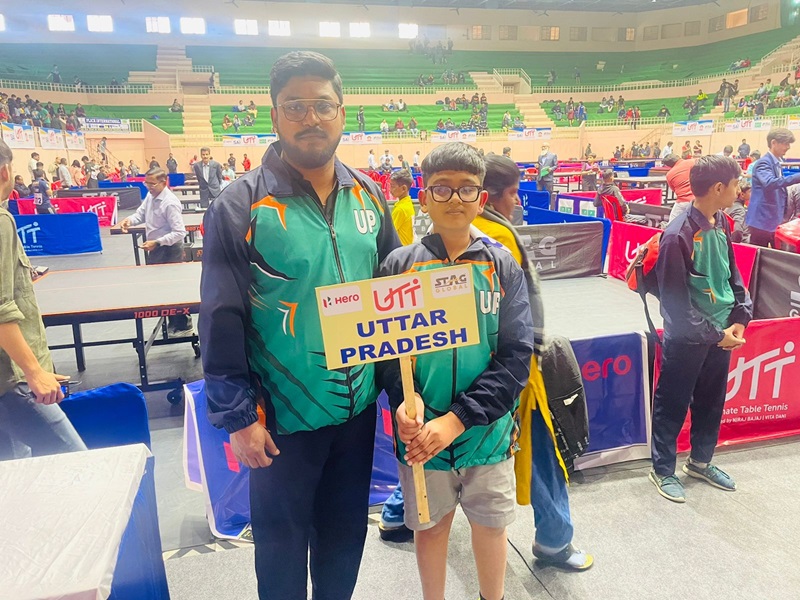
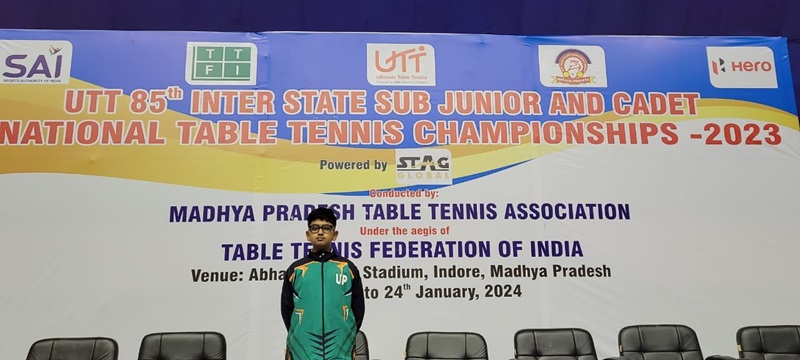
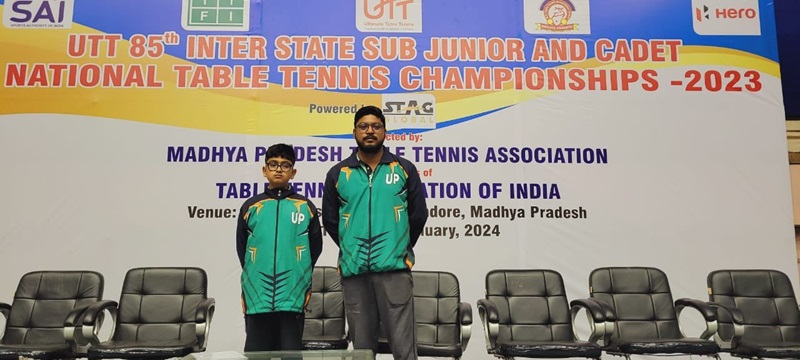
In the heart of Madhya Pradesh, amidst the electrifying ambiance of the Abhay Prashal Indore Stadium, the UTT 85th Inter State Sub Junior and Cadet National Table Tennis Championships 2024 unfolded, captivating enthusiasts and participants alike. Organized under the aegis of the Madhya Pradesh State Table Tennis Association and the Table Tennis Federation of India, this prestigious event witnessed the convergence of talent from across the nation.
A standout among the throng of participants was the contingent from SETH ANANDRAM JAIPURIA School, Lucknow, whose presence added a unique flair to the championship. With 31 states and approximately 700 players vying for glory, the competition surged to unprecedented levels, igniting the spirit of sportsmanship and camaraderie.
A notable highlight of the event was the appointment of Mr. Vikram Singh, the esteemed sports teacher from SAJS, as the coach of the Uttar Pradesh Table Tennis Team. Mr. Singh’s commendable achievement underscores the pivotal role of coaches in honing the skills and performance of players, thereby steering the team towards success.
In the midst of this spirited contest, Abhiraj Agarwal, a talented player from Grade 7, emerged as a beacon of excellence, representing Uttar Pradesh with fervor and determination. His participation in the National Championship epitomizes the culmination of dedication and skill, showcasing the pinnacle of sporting prowess.
The achievements of SETH ANANDRAM JAIPURIA School, Mr. Vikram Singh, and Abhiraj Agarwal not only reflect individual prowess but also underscore the significance of supportive school environments and dedicated mentors. As we extend our heartfelt congratulations to the entire contingent, we also offer our best wishes for their continued triumphs in the realm of table tennis and beyond. May their journey be marked by perseverance, passion, and unparalleled success.
Hindi Olympiad Foundation : International Hindi Olympiad Results
सेठ आनंदराम जैपुरिया लखनऊ ने अंतरराष्ट्रीय स्तर पर हिंदी ओलंपियाड में बाजी मारी, आठ छात्रों ने स्वर्ण, तीन ने रजत तो एक छात्र ने कांस्य पदक जीता। अंतर्राष्ट्रीय स्तर पर आयोजित इस प्रतियोगिता में सर्वाधिक स्वर्ण पदक लाकर छात्रों ने विद्यालय का नाम रौशन किया।
Seth Anandram Jaipuria School Excels at National Art Olympiad
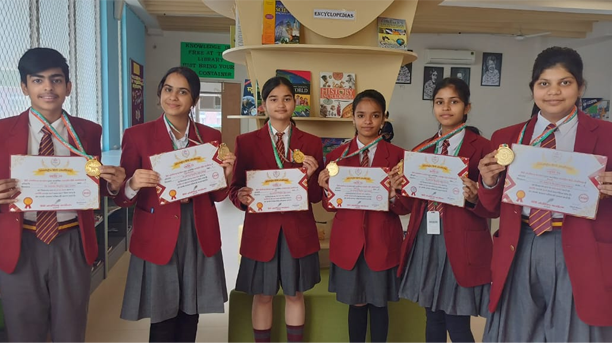
“Seth Anandram Jaipuria School in Lucknow proudly announces its triumph at the Contemporary Foundation for Art and Craft (CFAC) National Art Olympiad. Amongst a diverse pool of participants from across the country, the junior artists from Seth Anandram Jaipuria School showcased exceptional talent, securing the coveted Best Achievement Award.
The winners from Seth Anandram Jaipuria School are as follows:
1. Ayati Srivastava – Class 3D
2. Ishan Mishra – Class 3D
3. Apoorva Jaiswal – Class 3B
4. Aradhya Singh – Class 5D
5. Vaishnavi Mishra – Class 10A
6. Aditi Pandey – Class 10A
This success underscores the nurturing environment and exemplary guidance provided by Seth Anandram Jaipuria School. Gratitude extends to mentors and educators whose support has been instrumental in shaping these budding talents.
The triumph at the CFAC National Art Olympiad celebrates creativity, talent, and passion for the arts. It is a testament to the transformative power of art and the boundless possibilities ahead for these young artists.