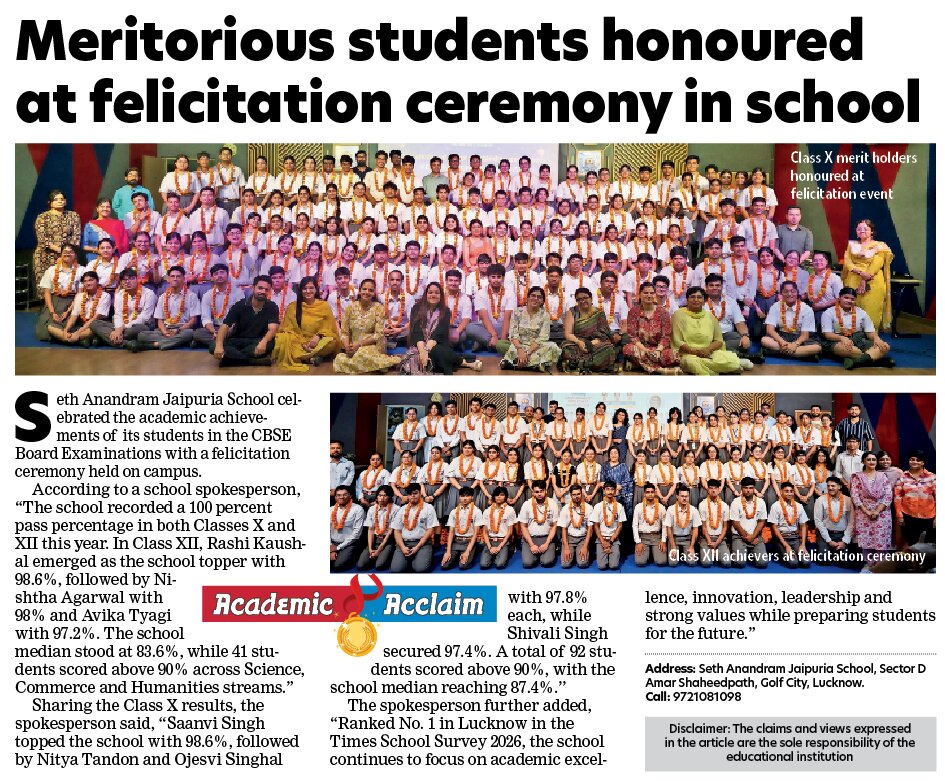
Lucknow’s Seth Anandram Jaipuria School Among World’s Top 10 Schools in Prestigious Global Education Awards
Recognised in the Supporting Healthy Lives category of the World’s Best School Prizes 2026 for its innovative student-led initiative, Project Alchemy
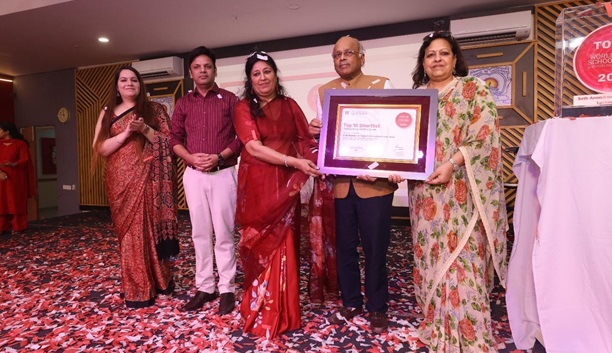
Lucknow, India: In a landmark achievement for Indian education, Seth Anandram Jaipuria School, Shaheed Path, Lucknow, has been shortlisted among the Top 10 schools globally in the Supporting Healthy Lives category of the prestigious World’s Best School Prizes 2026, founded by T4 Education.
Widely regarded as one of the world’s most prestigious education awards, the World’s Best School Prizes celebrate schools that are driving positive change through innovation, community impact, and transformative educational practices. The awards recognise institutions across five categories aligned with the United Nations Sustainable Development Goals (SDGs).
Seth Anandram Jaipuria School, Shaheed Path, Lucknow, has been recognised for Project Alchemy, the school’s student-led morning assembly initiative that places student voice, well-being, and agency at the centre of school life.
Moving beyond the conventional assembly format, Project Alchemy empowers students to conceptualise, curate, and lead meaningful conversations on themes ranging from emotional well-being and mental health to sustainability, social responsibility, and global citizenship. By creating spaces for open dialogue, reflection, and expression, the initiative has transformed assemblies into meaningful experiences for learning, personal growth, and community building.
The global recognition reflects the school’s sustained commitment to nurturing a learning ecosystem that prioritises student well-being alongside academic excellence, holistic development, and social responsibility.
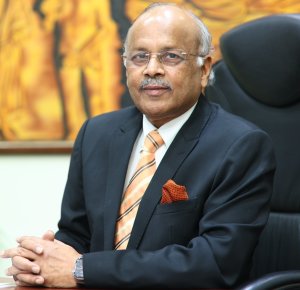
“This global recognition is a proud moment not only for the Jaipuria family but also for Indian education. Being shortlisted among the Top 10 schools in the world for the World’s Best School Prizes reflects our unwavering commitment to nurturing schools that place student well-being, innovation, and values at the heart of learning. At Seth Anandram Jaipuria School, Lucknow, initiatives such as Project Alchemy demonstrate the transformative power of giving students agency and voice. We are honoured to see this vision receiving global acknowledgement and remain committed to preparing young people to lead with purpose, compassion, and confidence,” said Shishir Jaipuria, Chairman & Managing Director, Seth Anandram Jaipuria Group of Educational Institutions.
Speaking on the achievement, Poonam Kochitty, Principal, Seth Anandram Jaipuria School, Shaheed Path, Lucknow, said, “This recognition belongs to our students, educators, parents, and every member of the Jaipuria community. Project Alchemy was built on a simple belief: every child deserves to be heard, valued, and empowered. By creating meaningful spaces for dialogue, reflection, and expression, we have witnessed our students grow into confident, empathetic, and responsible individuals. To see a student-led initiative from Lucknow being recognised on a global platform is both humbling and inspiring, and it strengthens our resolve to continue redefining learning experiences for our children.”
As part of this recognition, representatives from the school will join educators, policymakers, and school leaders from across the world at the World Schools Summit in London. The summit will provide an opportunity to exchange best practices and contribute to global conversations on the future of education.
This achievement places Lucknow firmly on the global education map and highlights the growing contribution of Indian schools in shaping innovative, student-centred learning ecosystems.
About Seth Anandram Jaipuria School, Shaheed Path, Lucknow
Seth Anandram Jaipuria School, Shaheed Path, Lucknow, is a leading educational institution known for academic excellence, innovation, and holistic development. The school has been recognised as a case study by the Global Schools Program of the UN Sustainable Development Solutions Network (UN SDSN) for its work in promoting sustainability and advancing the Sustainable Development Goals (SDGs).
A proud Round Square school, the institution has established a strong reputation in academics, sports, co-curricular activities, and student leadership. The school continues to nurture responsible, globally minded learners equipped to lead and create positive change in society.
About Seth Anandram Jaipuria Group of Educational Institutions
Established in 1945, Seth Anandram Jaipuria Group of Educational Institutions is one of India’s leading educational groups with a legacy spanning over eight decades. The Society has played a significant role in shaping quality education in India through a network of educational institutions across K-12, higher education, and teacher development.
Driven by the philosophy of holistic development, innovation, and values-based education, the Society is committed to nurturing future-ready learners equipped with the knowledge, skills, and mindset required to thrive in an evolving global landscape.
SUCCESS WITH PURPOSE AND CHANGE: THE JAIPURIAN ETHOS
Privilege is when you think something isn’t a problem because it does not affect you. The silence in the auditorium when these words were spoken during the morning assembly remains one of my most rewarding experiences as an educator. That day, I felt an undeniable alignment with my purpose as a teacher and human being. It all began with a single question one morning: What do you understand by the word’ privilege’? The responses did not surprise me. Many equated privilege with success; some saw it as something earned and, therefore, valuable. I followed up with another question: What is success, for that matter? “To have all that you want—financial stability, power, respect, and peace,” came the responses, brimming with ambition shaped by the world they had known. And then, they were shown a different world—videos of children growing up in war-torn regions. What would success mean for them?
Their answers changed. Peace. Food and basic survival. Safety. A home, even if it’s just a single room without luxuries. The larger question emerged: How have we failed to see this alternate reality? Privilege was the answer—the fact that wars, hunger, and displacement did not affect us directly. And in that moment of realisation, the silence that filled the room was not one of dismissal but of reflection. My students had grasped a fundamental truth: their idea of success was subjective—one shaped by privilege. Success, in its truest form, is futile if it does not work towards uplifting those who are underprivileged. This is precisely what the Jaipurian ethos means to me. We strive to nurture students who are prepared to lead with empathy, kindness, and integrity. Success is not about donning a power suit as the CEO of a company; it is about wielding influence with ethics and a strong moral compass. The ethos of Jaipuria is also about perspective-building. It establishes that education is an acquisition of knowledge and developing informed, compassionate, and morally sound perspectives. One of the most profound manifestations of the Jaipurian ethos is our morning assemblies. A tradition initiated by our principal, Ms. Poonam Kochitty, these assemblies embody one of the most democratic practices in our school. Students and teachers engage with ideas that challenge their preconceptions every morning, invite discourse, and encourage introspection. Certain beliefs are reinforced while others are dismantled—but what remains constant is the process of knowing life a little more. This, I believe, is the very essence of education.
Jaipuria’s vision is not limited to academic excellence; it is about shaping students who are healers and lovers of their planet. As an educator, this ethos has profoundly shaped my ideology. It has reaffirmed my belief that learning should not be confined to the idea of objective certitudes and that right angles and congruence theorems might fail to come to grips with the abstractions of life. Education, like life, cannot thrive on absolutes. It must equip students to navigate the greys of life—to question, empathise, and act. And in that lies the true essence of the Jaipurian ethos.
Gurpreet TGT English
An exclusive article on the Art Exhibition at SAJS Lucknow
Print Media Gallery
Bharat vs. India: The urban-rural divide in digital learning and how to bridge it
The story of India’s development has two narratives – one of inexorable urban growth driven by an empowered middle-class, and the other of a huge untapped rural potential in villages and small towns. Technology has contextualized this contrast in the shape of a digital divide – the tech haves and have-nots of modern day India versus a rising Bharat.
The urban-rural schism has a deep bearing on education. A survey conducted by National Statistics Office (NSO) brings to light some fissures of this digital learning divide. The findings reveal that only 26.4% males aged 15 to 24 years in rural India are digitally literate compared to their 44.2% counterparts in urban India. The gap is still starker among rural females, with only 14.3% of them possessing basic digital literacy skills. In general, the internet skills of population in states such as Goa, Kerala and Tamil Nadu are much higher than those observed in Uttar Pradesh and Chhattisgarh.
At the core of this divide are infrastructural gaps. Schools in rural India still grapple with erratic power supply and lack of high speed internet. A study conducted by Azim Premji foundation revealed that about 60% of school children in rural areas lack access to online learning due to unavailability of devices or poor broadband connectivity. More often than not, teachers too don’t possess the digital skills nor the inclination to be tech-savvy. Communities strive on the fringes of digital inclusion. The rural India is yet to tune in to the global AI revolution leaving its footprint in the nation’s metropolises and IT capitals. In such a scenario, bridging this gap becomes a national priority, so that rural Bharat can power the nation’s growth in step with the urban India.
Bridging the digital learning divide
Broadband Inclusivity: Transformation always begins at the grassroots level, but the vision must come from the top. India, under the leadership of Prime Minister Narendra Modi, has made notable strides towards inclusive digital revolution. The National Broadband Mission – launched earlier this year – aims to connect 2.7 lakh villages with optical fibre cable by 2030. The mission targets broadband connectivity to 90% of anchor institutions, including schools, in next five years. This bodes well for a nation where a major chunk of population still lives in villages.
Bridging the Language Divide: To bring rural Bharat up to speed with the urban India, the language gap must be bridged. Many a talent fail to avail opportunities and platforms to bloom due to the linguistic hurdle. The government has already taken the lead through platforms like DIKSHA which provides educational content in 36 Indian languages. Language barriers are also transcended through Bhashini, an AI powered real-time language translation platform. Government and private schools must leverage these platforms to facilitate digital inclusivity.
Professional Development of Teachers: The quality of education, it is often said, is as good as the quality of teachers. The National Education Policy 2020 mandates 50 hours of continuous professional development for teachers. A good part of this must be focused on digital upskilling, and AI training. Private teacher training academies such as Saamarthya Teachers Training Academy of Research (STTAR) have taken initiatives to provide ICT training to 10,000 teachers of government schools in Uttar Pradesh. More such progressive initiatives should be in order.
Community Empowerment: For the digital learning divide to be bridged, transformation must take place beyond classrooms and schools. Communities need to be made aware of the importance of tech savviness in a digital age. The recent decision of the UP government to allocate Rs. 278 crore to digitally empower gram panchayats is a step in the right direction and should be emulated in other states.
Public-Private Partnerships: Public policy push and private sector innovation should come together as force multipliers for a digital renaissance of rural India. The expertise of EdTech firms needs to be leveraged through PPP model for the larger public good.
Towards a developed India
Mahatma Gandhi had once said that India lives in its villages. The fact hasn’t changed over the last 8 decades. Today, about two-third of the 1.4 billion population lives in rural heartland, majority of them falling in the young age bracket. Tapping into the potential of this cohort through quality education, including digital learning and digital skills, will elevate the human capital exponentially. It will catalyze the country’s march towards a future where a digitally inclusive Bharat and modern India would converge to create a knowledge superpower, a developed nation and a beacon for the world to emulate.