Beyond Grades: How Progressive Schools Are Redefining Success
According to research by the National Library of Medicine, 81.6% of students in Grades 10th and 12th reported examination-related anxiety, and approximately 32.6% exhibited symptoms of psychiatric issues.
As the board exam results pour in each year, so do waves of emotions, joy, relief and for some, disappointment. While marks remain a milestone in a student’s academic journey, a growing number of progressive schools are actively shifting the narrative: scores are not the final verdict on a child’s potential, Harish Sanduja, Director-Schools & IT, Seth Anandram Jaipuria Group of Educational Institutions, told the Financial Express Education.
“Our students consistently excel in board exams year on year. But when some feel dejected when their performance is not up to expectations, particularly in subjects that they are passionate about, we take it upon ourselves to help them,” Sanduja said.
This commitment translates into proactive psychological counseling, parent-student sessions and individualised career guidance. “We advise parents to support and not criticise and to look at the vast scope of academic and professional opportunities one can pursue nowadays. Our counselling cell is open to all communication, he added.
According to research by the National Library of Medicine, 81.6% of students in Grades 10th and 12th reported examination-related anxiety, and approximately 32.6% exhibited symptoms of psychiatric issues in India.
The emotional turbulence that follows disappointing results is real. And it needs to be addressed gently, not suppressed. “We often hold expectations by envisioning specific outcomes,” says Vaishali Thukral, Head – Guidance & Counselling at Heritage Xperiential Learning School, Gurugram.
“When these expectations go unmet—as can happen with exam results—it’s natural to experience disappointment, frustration, or self-doubt. Rather than resisting these emotions, acknowledging them without judgment helps lighten our own mood.”
She asserts that emotional honesty is the first step to healing. By taking small, manageable steps like prioritising rest, connecting with family and reflecting on one’s goals, students can rebuild their confidence and vision for the future.
This shift in outlook is now being championed across many forward-thinking schools, where well-being is placed on par with academic achievement.
“Board exam results are just one milestone in a student’s journey—not a measure of their worth or potential,” says Neena Kaul, Director and Principal of Heritage Xperiential Learning Schools. “We encourage adults—parents and educators—to offer reassurance, avoid comparisons, and focus on effort and emotional support rather than outcomes.”
As institutions begin to reframe how we view academic success, the message is clear: exams are a chapter, not the whole story. And with the right guidance, empathy and encouragement, every student can find a path that aligns with their unique strengths and aspirations.
Nurturing Future Leaders Through Holistic Education and Innovative Learning
On June 18, 2024, students from Seth AnandramJaipuria School, Lucknow, embarked on a five-day adventure program at Rock sport Mussoorie, discovering inner excitement. They participated in activities such as scrambling, knot making, tent pitching, stream running, raft building, rock climbing, zip-lining, rappelling, and guerrilla warfare, divided into two groups: Black Panthers and Red Riots.
The camp began with a warm welcome and safety briefing, followed by warm-up exercises that fostered camaraderie. Rock climbing and zip-lining were particularly popular, while rappelling also boosted confidence. Guerrilla Warfare, involving resource collection and tea-making, encouraged teamwork and creativity. Both students and teachers enjoyed a trek.
Daily journal writing and reflection activities promoted gratitude and feedback. Students excelled in tidiness, peer assistance, and overall conduct. Prizes were awarded for Best Camper, Most Tidy Cottage, Best Team Leader, Best Team, and Best Journal. The trip concluded with a dance party.
The camp successfully built camaraderie, enhanced student-teacher interactions, and provided skill development opportunities, making it a memorable and enjoyable experience.
Artificial Intelligence in Indian classrooms: Teaching teachers is the first task
The absorption of Artificial Intelligence in systems of higher education has made it imperative for the tech’s uptake in school education as well. Bringing AI into learning systems and classrooms in India is not just a question of making changes to the syllabus, but faces a preliminary challenge—teachers.
Training India’s teachers to bring them to a level where they are able to teach and train their students is the first hurdle that will have to be mastered before AI can make its way to our students’ curriculum. And this is not just a question of teacher training, but also one of making changes to systems to accommodate AI in the classrooms.
The introduction of AI in classrooms is certain to change several aspects of how a teacher functions. India has a student-teacher ratio of 24:1, which is significantly larger than the UNESCO-recommended 15:1, indicating that teachers are frequently swamped with administrative chores. These responsibilities are likely to take away the time and energy they would dedicate to teaching.
Usage of AI automation in schools can help alleviate this issue. AI is already assisting teachers at the Jaipuria Group of Educational Institutions by automating chores such as grading and attendance. “AI supports teachers by automating tasks, allowing them to focus on teaching,” said Mr Harish Sanduja, the director of schools and IT at the Seth Anandram Jaipuria Group of Educational Institutions.
According to UNESCO, India faces over a million unfilled teaching vacancies, particularly in rural areas. Hence, to utilise AI effectively for minor students, it becomes more important to incorporate AI in content delivery and use it for mundane educational needs, rather than simply introducing it as an elective subject in the curriculum.
“AI can certainly assist with content delivery, but schools must evolve to ensure that the ethical implications of AI are addressed. Teachers must start to focus on nurturing socio-economic skills in school students, and not just academic ones,” said Manit Jain, an alumnus of Harvard University, who is also the co-founder of the Heritage Group of Schools. AI in education and AI for education are thus emerging as two distinct, yet inextricably linked concerns.
While curricula, even at school levels need to constantly evolve, using AI in content delivery can bring massive changes. For that to function, educators need to shift the attention towards being teachers of children, rather than being teachers of subjects. Only then the enormous transformative capacity of this seemingly unfamiliar phenomenon could be harnessed to its full capacity, without fear. “I don’t know whether humans will be extinct in future, but if school models are not re-thinked in this direction, humanity will be extinct in the next 20-30 years,” Jain added. The need for balance while recognising the importance of AI in assisting teachers, and being used for content delivery in schools thereby becomes crucial.
Posted By: India Today Published On: 06 March, 2025 Link:- https://bestcolleges.indiatoday.in/news-detail/artificial-intelligence-in-indian-classrooms-teaching-teachers-is-the-first-task
लखनऊ पहुंची ओलंपियन अंजू बॉबी जार्ज:2036 ओलंपिक मेजबानी पर कहा- पूरा इको सिस्टम बदल जाएगा; मेडल भी बढ़ेगा
What Cambridge Curriculum offers, How the Board Prepares Students for International Success!
Among the various educational boards, the Cambridge curriculum stands out for its comprehensive and forward-thinking approach.
In an increasingly globalized world, education systems are evolving to equip students with the skills and knowledge necessary for international success. Among the various educational boards, the Cambridge curriculum stands out for its comprehensive and forward-thinking approach.
The Cambridge curriculum, administered by the Cambridge International Education (CIE), is renowned for its international recognition and rigorous academic standards. Unlike other boards, the Cambridge curriculum offers a flexible and diverse range of subjects, allowing students to tailor their education to their interests and career aspirations. This flexibility is a significant departure from the more rigid subject choices found in other boards.
Moreover, the Cambridge curriculum emphasizes critical thinking, problem-solving, and research skills. It encourages students to question, explore, and engage deeply with the material, fostering a love for learning that extends beyond the classroom. The curriculum is designed to be culturally inclusive, reflecting global perspectives and preparing students to thrive in a multicultural environment.
The Cambridge curriculum is specifically designed to develop a broad range of student attributes and skills that are essential for international success. One of the core aims is to nurture confident, responsible, reflective, innovative, and engaged learners. These attributes are cultivated through a combination of academic rigor and a holistic approach to education. Global collaborations online and physical student exchange programmes are also an important way of developing contextual and immersive learnings.
While some other boards focus on stronger memorization skills and standardized testing, the Cambridge approach prioritizes understanding and application of knowledge. Students are assessed through a variety of methods, including coursework, practical assessments, and examinations, which provide a more comprehensive evaluation of their abilities.
Cambridge students are encouraged to develop independent learning skills from an early age. They engage in projects, research, and collaborative activities that enhance their problem-solving abilities and teamwork. This contrasts with the more traditional, teacher-centred approach of various boards, where the focus is often on individual performance.
Teaching methodologies in Cambridge schools are distinctively student-centred. Teachers act as facilitators, guiding students through inquiry-based learning and encouraging them to take ownership of their education. Lessons are interactive, with a focus on discussion, debate, and hands-on activities.
This approach helps students develop a deeper understanding of concepts and their real-world applications. Feedback and exit slips filled by students about their understanding of the topic is a regular feature. This helps in better individual student learning and assessment of understanding and learning.
An intrinsic part of the Cambridge curriculum is Global Perspectives, a unique and transformational programme that helps students at every stage of school education. It helps to develop outstanding transferable skills, including critical thinking, research and collaboration. This innovative and stimulating skills-based programme places academic study in a practical, real-world context. It gives students aged 5 to 19 years the opportunity to develop the skills that they need to be successful at school and university as well as in their future careers.
Cambridge teaching methodologies also incorporate the latest educational research and technology. Teachers use a variety of digital tools and resources to enhance learning, making lessons more engaging and relevant to the modern world. This integration of technology is less pronounced where traditional teaching methods still dominate.
The recruitment and training of teachers in Cambridge schools are critical factors in maintaining the high standards of education. Cambridge schools seek teachers who are not only subject matter experts but also skilled in modern pedagogical techniques. The recruitment process often includes rigorous interviews, teaching demonstrations, and assessments of the candidate’s ability to engage and inspire students.
Once recruited, Cambridge teachers undergo continuous professional development. They are provided with extensive training in Cambridge teaching methodologies, assessment techniques, and the use of technology in education. This ongoing professional development ensures that teachers remain current with the latest educational practices and are well-equipped to meet the diverse needs of their students.
The presence of online community where teachers can access/upload and share ideas is a critical game changer. It helps a lot in building community and sharing concerns and best ways to handling those concerns.
The Cambridge curriculum stands out for its ability to prepare students for international success through its flexible, rigorous, and holistic approach to education. It equips students with the skills and attributes needed to thrive in a globalized world. The distinctive teaching methodologies and robust teacher recruitment and training practices further enhance the effectiveness of the Cambridge curriculum. Embracing the strengths of the Cambridge curriculum can significantly contribute to learners’ success on the national and international stage.
(Author Harish Sandujai is Director Schools and IT, Seth Anandram Jaipuria Group of Educational Institutions. Views expressed here are personal.)
Published On:- June 10th, 2024 Published By:- Hindustan Times Link:-https://www.hindustantimes.com/education/features/what-cambridge-curriculum-offers-how-the-board-prepares-students-for-international-success-101718006145684.html
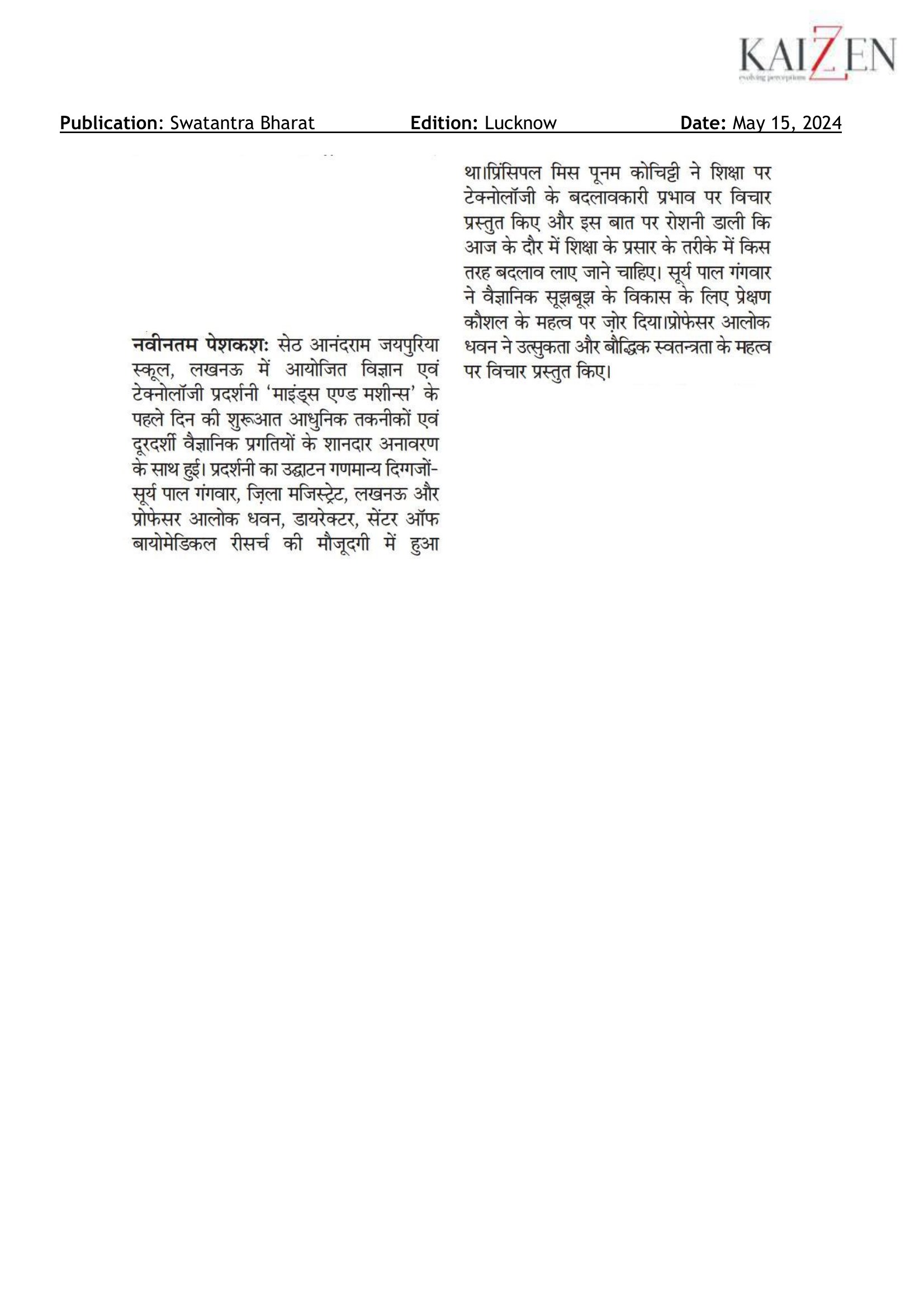
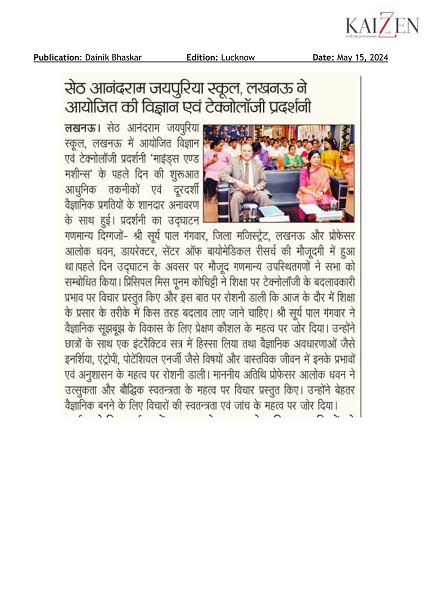
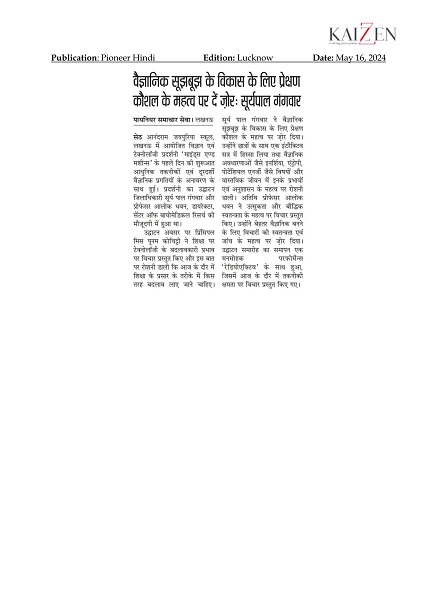
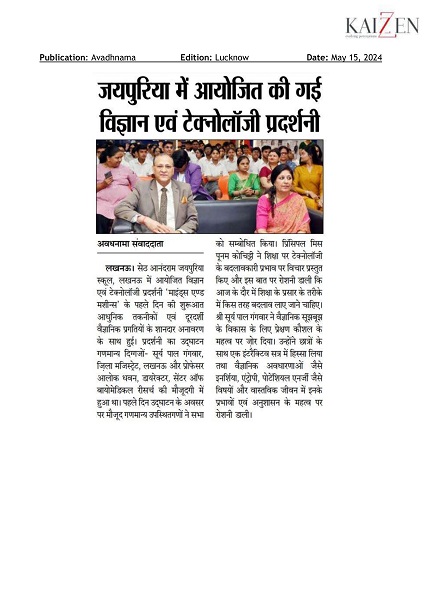
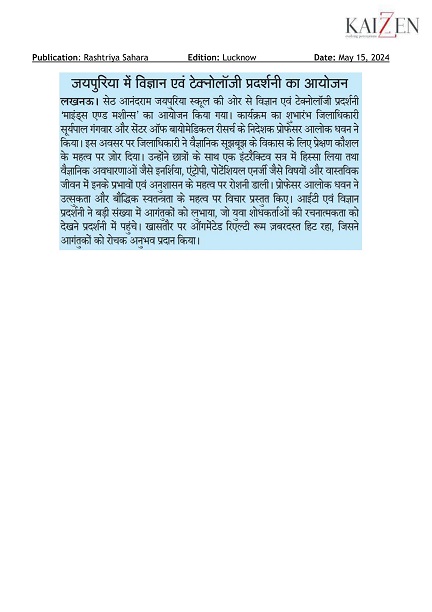
Seth Anandram Jaipuria School, Lucknow organized Science and Technology Exhibition
IC3 Regional Forum at Seth Anandram Jaipuria School, Lucknow
सेठ आनंदराम जैपुरिया स्कूल, लखनऊ ने इंटरनेशनल अर्ली ईयर्स करिकुलम लॉन्च किया