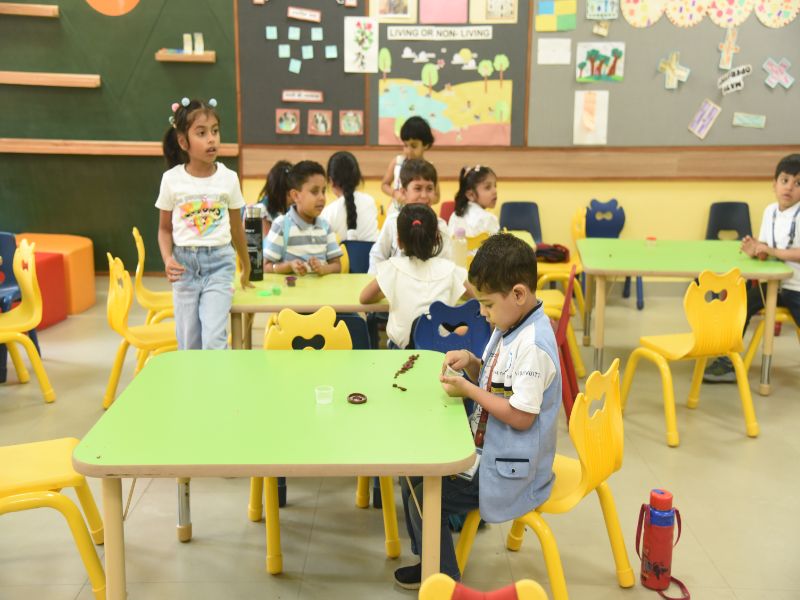
Lucknow’s Seth Anandram Jaipuria School Among World’s Top 10 Schools in Prestigious Global Education Awards
Recognised in the Supporting Healthy Lives category of the World’s Best School Prizes 2026 for its innovative student-led initiative, Project Alchemy
Lucknow, India: In a landmark achievement for Indian education, Seth Anandram Jaipuria School, Shaheed Path, Lucknow, has been shortlisted among the Top 10 schools globally in the Supporting Healthy Lives category of the prestigious World’s Best School Prizes 2026, founded by T4 Education.
Widely regarded as one of the world’s most prestigious education awards, the World’s Best School Prizes celebrate schools that are driving positive change through innovation, community impact, and transformative educational practices. The awards recognise institutions across five categories aligned with the United Nations Sustainable Development Goals (SDGs).
Seth Anandram Jaipuria School, Shaheed Path, Lucknow, has been recognised for Project Alchemy, the school’s student-led morning assembly initiative that places student voice, well-being, and agency at the centre of school life.
Moving beyond the conventional assembly format, Project Alchemy empowers students to conceptualise, curate, and lead meaningful conversations on themes ranging from emotional well-being and mental health to sustainability, social responsibility, and global citizenship. By creating spaces for open dialogue, reflection, and expression, the initiative has transformed assemblies into meaningful experiences for learning, personal growth, and community building.
The global recognition reflects the school’s sustained commitment to nurturing a learning ecosystem that prioritises student well-being alongside academic excellence, holistic development, and social responsibility.
“This global recognition is a proud moment not only for the Jaipuria family but also for Indian education. Being shortlisted among the Top 10 schools in the world for the World’s Best School Prizes reflects our unwavering commitment to nurturing schools that place student well-being, innovation, and values at the heart of learning. At Seth Anandram Jaipuria School, Lucknow, initiatives such as Project Alchemy demonstrate the transformative power of giving students agency and voice. We are honoured to see this vision receiving global acknowledgement and remain committed to preparing young people to lead with purpose, compassion, and confidence,” said Shishir Jaipuria, Chairman & Managing Director, Seth Anandram Jaipuria Group of Educational Institutions.
Speaking on the achievement, Poonam Kochitty, Principal, Seth Anandram Jaipuria School, Shaheed Path, Lucknow, said, “This recognition belongs to our students, educators, parents, and every member of the Jaipuria community. Project Alchemy was built on a simple belief: every child deserves to be heard, valued, and empowered. By creating meaningful spaces for dialogue, reflection, and expression, we have witnessed our students grow into confident, empathetic, and responsible individuals. To see a student-led initiative from Lucknow being recognised on a global platform is both humbling and inspiring, and it strengthens our resolve to continue redefining learning experiences for our children.”
As part of this recognition, representatives from the school will join educators, policymakers, and school leaders from across the world at the World Schools Summit in London. The summit will provide an opportunity to exchange best practices and contribute to global conversations on the future of education.
This achievement places Lucknow firmly on the global education map and highlights the growing contribution of Indian schools in shaping innovative, student-centred learning ecosystems.
About Seth Anandram Jaipuria School, Shaheed Path, Lucknow
Seth Anandram Jaipuria School, Shaheed Path, Lucknow, is a leading educational institution known for academic excellence, innovation, and holistic development. The school has been recognised as a case study by the Global Schools Program of the UN Sustainable Development Solutions Network (UN SDSN) for its work in promoting sustainability and advancing the Sustainable Development Goals (SDGs).
A proud Round Square school, the institution has established a strong reputation in academics, sports, co-curricular activities, and student leadership. The school continues to nurture responsible, globally minded learners equipped to lead and create positive change in society.
About Seth Anandram Jaipuria Group of Educational Institutions
Established in 1945, Seth Anandram Jaipuria Group of Educational Institutions is one of India’s leading educational groups with a legacy spanning over eight decades. The Society has played a significant role in shaping quality education in India through a network of educational institutions across K-12, higher education, and teacher development.
Driven by the philosophy of holistic development, innovation, and values-based education, the Society is committed to nurturing future-ready learners equipped with the knowledge, skills, and mindset required to thrive in an evolving global landscape.
SUCCESS WITH PURPOSE AND CHANGE: THE JAIPURIAN ETHOS
Privilege is when you think something isn’t a problem because it does not affect you. The silence in the auditorium when these words were spoken during the morning assembly remains one of my most rewarding experiences as an educator. That day, I felt an undeniable alignment with my purpose as a teacher and human being. It all began with a single question one morning: What do you understand by the word’ privilege’? The responses did not surprise me. Many equated privilege with success; some saw it as something earned and, therefore, valuable. I followed up with another question: What is success, for that matter? “To have all that you want—financial stability, power, respect, and peace,” came the responses, brimming with ambition shaped by the world they had known. And then, they were shown a different world—videos of children growing up in war-torn regions. What would success mean for them?
Their answers changed. Peace. Food and basic survival. Safety. A home, even if it’s just a single room without luxuries. The larger question emerged: How have we failed to see this alternate reality? Privilege was the answer—the fact that wars, hunger, and displacement did not affect us directly. And in that moment of realisation, the silence that filled the room was not one of dismissal but of reflection. My students had grasped a fundamental truth: their idea of success was subjective—one shaped by privilege. Success, in its truest form, is futile if it does not work towards uplifting those who are underprivileged. This is precisely what the Jaipurian ethos means to me. We strive to nurture students who are prepared to lead with empathy, kindness, and integrity. Success is not about donning a power suit as the CEO of a company; it is about wielding influence with ethics and a strong moral compass. The ethos of Jaipuria is also about perspective-building. It establishes that education is an acquisition of knowledge and developing informed, compassionate, and morally sound perspectives. One of the most profound manifestations of the Jaipurian ethos is our morning assemblies. A tradition initiated by our principal, Ms. Poonam Kochitty, these assemblies embody one of the most democratic practices in our school. Students and teachers engage with ideas that challenge their preconceptions every morning, invite discourse, and encourage introspection. Certain beliefs are reinforced while others are dismantled—but what remains constant is the process of knowing life a little more. This, I believe, is the very essence of education.
Jaipuria’s vision is not limited to academic excellence; it is about shaping students who are healers and lovers of their planet. As an educator, this ethos has profoundly shaped my ideology. It has reaffirmed my belief that learning should not be confined to the idea of objective certitudes and that right angles and congruence theorems might fail to come to grips with the abstractions of life. Education, like life, cannot thrive on absolutes. It must equip students to navigate the greys of life—to question, empathise, and act. And in that lies the true essence of the Jaipurian ethos.
Gurpreet TGT English
Empowering the Future: Key Topics Parents Should Focus on for Admission 2026-27
Choosing the right school for your child is one of the most important decisions a parent can make. It’s about more than just academics—it’s about ensuring that your child’s overall development is nurtured in an environment that prepares them for the future. With the admission season for 2026-27 fast approaching, parents are looking beyond traditional education. Here are the top topics that parents are prioritizing in today’s education landscape:
1. Preparing for Tomorrow: 21st Century Skills
In today’s fast-evolving world, parents want their children to be ready for more than just exams. They seek schools that prioritize 21st-century skills such as critical thinking, problem-solving, creativity, and collaboration. These skills are just as important as academics and are essential for success in the global workforce. As we look to the future, parents want to ensure their children are equipped with the tools they need to thrive in a world full of challenges and opportunities.
2. Holistic Development: Beyond the Classroom
Parents now recognize that their child’s emotional, social, and physical well-being is just as important as their academic success. Schools that focus on the holistic development of a child stand out. These schools incorporate emotional intelligence, leadership skills, and overall personal growth into their curriculum. Parents want their children to be well-rounded individuals, prepared for life beyond the classroom. Extracurricular activities like sports, arts, music, and dance are seen as key components in nurturing a child’s growth.
3. STEAM Education: Fostering Innovation
Science, Technology, Engineering, Arts, and Mathematics (STEAM) are essential in shaping tomorrow’s innovators. Parents today are actively seeking schools that offer a strong STEAM curriculum, one that fosters creativity and problem-solving. Schools integrating technology, coding, robotics, and digital arts are preparing children for the future by equipping them with hands-on, practical learning experiences. As technology continues to evolve, parents want their children to have the skills necessary to be thinkers and problem solvers.
Every child is unique, and parents increasingly value schools that offer personalized learning. Schools that cater to each child’s pace, interests, and learning style ensure that no child is left behind. Whether a child excels in specific subjects or requires additional support, personalized learning plans ensure every student can succeed. Parents want to be confident that their child will receive the attention they need to thrive academically and personally.
5. Global Exposure and Cultural Awareness
In an increasingly interconnected world, global exposure and cultural awareness are crucial. Parents are looking for schools that offer international learning opportunities, whether through exchange programs or exposure to global perspectives in the classroom. Schools that foster multiculturalism and global citizenship are highly regarded. Parents want their children to appreciate diverse perspectives and be prepared for a globalized world.
6. Digital Literacy and Online Safety
With the rise of the digital age, teaching children how to navigate the online world responsibly has become essential. Schools that offer digital literacy programs, focusing on online safety, cybersecurity, and responsible use of technology, are increasingly popular with parents. Understanding how to use technology for learning and personal growth is vital in today’s world, and parents expect schools to equip their children with these skills.
As global environmental issues take center stage, many parents are seeking schools that emphasize sustainability and environmental education. Schools that promote eco-friendly practices, green campuses, and teach children about the importance of sustainability are highly sought after. Parents want their children to be conscious global citizens who understand the importance of preserving the planet.
8. Mental Health Support and Emotional Well-being
Mental health awareness is now a priority for parents, and they are actively seeking schools that provide strong emotional support and counseling services. Schools that promote mental health, stress management, and emotional well-being are valued by parents. In a world where children face increasing pressures, schools that offer a robust mental health support system can make a significant difference in a child’s overall development.
9. Affordable and Transparent Fee Structures
While quality education is paramount, affordability remains a major factor for many parents. Transparent fee structures with no hidden costs and flexible payment options provide peace of mind. Parents are increasingly looking for schools that offer scholarships or flexible fee plans, allowing them to make an informed financial decision without compromising on the quality of education.
10. Strong Parent-Teacher Partnerships
Effective communication between parents and teachers plays a vital role in a child’s success. Schools that foster a collaborative relationship with parents—through regular meetings, digital updates, and open lines of communication—are highly valued. Parents want to be actively involved in their child’s education, and schools that encourage this involvement provide a sense of trust and security.
Conclusion: Finding the Right School for Your Child in 2026-27
As the 2026-27 admission season approaches, it’s clear that parents are looking for schools that provide more than just academic excellence. They want institutions that foster the development of well-rounded, future-ready individuals who are prepared for a rapidly changing world. Schools that prioritize emotional well-being, skills development, and global awareness are highly sought after.
If you’re a parent considering the best education for your child, keep these priorities in mind. Seek a school that offers a balanced approach to learning, where your child’s growth—academic, emotional, and personal—is nurtured. The right school will help set the stage for your child’s future success.
Why Jaipuria Lucknow Stands Out: Best School in Lucknow
If you’re looking for a Top Ranked School in Lucknow, Seth Anandram Jaipuria School Lucknow is a name that consistently emerges at the top. With a commitment to holistic development, excellence in academics, and a focus on nurturing students’ individual talents, Jaipuria Lucknow has earned its place as one of the best schools in the city.
In this blog, we’ll delve into the reasons why Seth Anandram Jaipuria School is a preferred choice for parents and students alike in Lucknow .
1. Academic Excellence
At Jaipuria Lucknow, academic performance is a top priority. The school follows a well-rounded curriculum that prepares students for the challenges of the modern world. With experienced faculty and a commitment to continuous learning, the school offers a strong foundation for students, whether they are preparing for board exams or looking to excel in extracurricular activities.
The academic rigor at Jaipuria Lucknow is complemented by its modern teaching methodologies, which blend traditional education with modern technology. This balance ensures that students receive a comprehensive education that nurtures critical thinking, problem-solving, and creativity.
2. State-of-the-Art Facilities
One of the key factors that makes Seth Anandram Jaipuria School a Best School in Lucknow is its world-class facilities. The school boasts state-of-the-art infrastructure that includes spacious classrooms, modern science and computer labs, and a vast library. In addition, the campus features sports facilities, a swimming pool, and creative spaces that encourage physical and mental well-being.
3. Focus on Extracurricular Activities
Jaipuria Lucknow believes in the all-round development of its students. From sports to arts, music, and drama, the school offers numerous opportunities for students to explore their passions. The school’s extracurricular activities not only help students discover their hidden talents but also teach valuable life skills such as teamwork, leadership, and time management.
The school regularly organizes workshops, cultural events, and competitions, providing students with a platform to showcase their skills and build confidence.
4. A Strong Moral Foundation
Being a Best School in Lucknow, Seth Anandram Jaipuria School emphasizes moral and ethical education alongside academic learning. The school aims to develop responsible, well-rounded individuals who can contribute positively to society. It instills values such as integrity, empathy, and respect, ensuring that students grow into confident and compassionate leaders of tomorrow.
5. Experienced and Dedicated Faculty
The faculty at Jaipuria Lucknow are highly qualified, passionate about teaching, and committed to students’ success. Teachers here go beyond the traditional classroom setting, providing personalized attention and guidance to help students reach their full potential. The faculty’s dedication to continuous professional development ensures that they stay up-to-date with the latest trends and techniques in education.
6. Parent and Community Engagement
Seth Anandram Jaipuria School Lucknow fosters a strong partnership with parents, recognizing the important role they play in a child’s education. The school maintains regular communication with parents through parent-teacher meetings, newsletters, and updates about their child’s progress. This active involvement ensures that the educational journey is collaborative and tailored to each student’s needs.
Conclusion: Why Choose Jaipuria Lucknow? Best School in Lucknow
If you’re searching for a Best School in Lucknow, Seth Anandram Jaipuria School stands out due to its commitment to academic excellence, holistic development, and state-of-the-art facilities. The school’s focus on extracurricular activities, moral values, and parent engagement makes it the ideal choice for parents who want the best for their children.
For more information about Seth Anandram Jaipuria School Lucknow, visit our official website: Jaipuria Lucknow.
Chairman Mr. Shishir Jaipuria Featured as an Education Titan in Education Today Magazine
Chairman Mr. Shishir Jaipuria as one of the Education Titans – The Mavericks of Education 2025 by Education Today magazine.
The e-copy of the magazine can be accessed at: Link:-
Seth Anandram Jaipuria Lucknow Assemblies Featured by RoundSquare
10th March was a great day for us at Seth Anandram Jaipuria School Lucknow. Our Principal Ms. Poonam Kochitty received an email from Ms. Lara Rodwell, the Content Creator of Round Square, saying that she has heard wonderful things about how school fosters Adventure Through Debate, by daily student-led assemblies, where students present global issues such as refugee crises, gender dynamics, climate change, and the impact of conflict on children. She stated that the interactive discussions that follow sound like a fantastic example of how debate can be an adventure in learning and therefore she wanted to interview a few students across classes along with the Head of School Ms. Poonam Kochitty. She wanted one faculty member as well and so we had Ms. Gurpreet on board.
Six students- Saanvi Singh, Sarthak Raj, Aradhya Diwedi and Vedika Shukla, Ayati Srivastava and Atharv Misra – had the pleasure of attending an insightful and interactive session by Round Square, wherein they discussed the impact of the school’s morning assemblies in building the spirit of adventure through the art of debate and discourse. They touched on many subjects, starting from their own experiences of conducting assemblies, and later moving to the broader impact these assemblies have in creating more sensitivity and acceptance towards diverse perspectives.
They spoke about some specific assemblies that have molded them as individuals and how they have assisted in overcoming nervousness and becoming more comfortable with the thought of sharing their ideas and having meaningful conversations – all while pushing them to think differently and from a broader lens, bringing rationality and respect to the forefront.
The session concluded by sharing practical ways for other Round Square institutions to inculcate similar practices tailored to their culture and society. The children were greatly appreciated by Round Square, and we are hopeful of being featured in their article on Adventure through Debate.
Nurturing Future Leaders Through Holistic Education and Innovative Learning
On June 18, 2024, students from Seth AnandramJaipuria School, Lucknow, embarked on a five-day adventure program at Rock sport Mussoorie, discovering inner excitement. They participated in activities such as scrambling, knot making, tent pitching, stream running, raft building, rock climbing, zip-lining, rappelling, and guerrilla warfare, divided into two groups: Black Panthers and Red Riots.
The camp began with a warm welcome and safety briefing, followed by warm-up exercises that fostered camaraderie. Rock climbing and zip-lining were particularly popular, while rappelling also boosted confidence. Guerrilla Warfare, involving resource collection and tea-making, encouraged teamwork and creativity. Both students and teachers enjoyed a trek.
Daily journal writing and reflection activities promoted gratitude and feedback. Students excelled in tidiness, peer assistance, and overall conduct. Prizes were awarded for Best Camper, Most Tidy Cottage, Best Team Leader, Best Team, and Best Journal. The trip concluded with a dance party.
The camp successfully built camaraderie, enhanced student-teacher interactions, and provided skill development opportunities, making it a memorable and enjoyable experience.
Artificial Intelligence in Indian classrooms: Teaching teachers is the first task
The absorption of Artificial Intelligence in systems of higher education has made it imperative for the tech’s uptake in school education as well. Bringing AI into learning systems and classrooms in India is not just a question of making changes to the syllabus, but faces a preliminary challenge—teachers.
Training India’s teachers to bring them to a level where they are able to teach and train their students is the first hurdle that will have to be mastered before AI can make its way to our students’ curriculum. And this is not just a question of teacher training, but also one of making changes to systems to accommodate AI in the classrooms.
The introduction of AI in classrooms is certain to change several aspects of how a teacher functions. India has a student-teacher ratio of 24:1, which is significantly larger than the UNESCO-recommended 15:1, indicating that teachers are frequently swamped with administrative chores. These responsibilities are likely to take away the time and energy they would dedicate to teaching.
Usage of AI automation in schools can help alleviate this issue. AI is already assisting teachers at the Jaipuria Group of Educational Institutions by automating chores such as grading and attendance. “AI supports teachers by automating tasks, allowing them to focus on teaching,” said Mr Harish Sanduja, the director of schools and IT at the Seth Anandram Jaipuria Group of Educational Institutions.
According to UNESCO, India faces over a million unfilled teaching vacancies, particularly in rural areas. Hence, to utilise AI effectively for minor students, it becomes more important to incorporate AI in content delivery and use it for mundane educational needs, rather than simply introducing it as an elective subject in the curriculum.
“AI can certainly assist with content delivery, but schools must evolve to ensure that the ethical implications of AI are addressed. Teachers must start to focus on nurturing socio-economic skills in school students, and not just academic ones,” said Manit Jain, an alumnus of Harvard University, who is also the co-founder of the Heritage Group of Schools. AI in education and AI for education are thus emerging as two distinct, yet inextricably linked concerns.
While curricula, even at school levels need to constantly evolve, using AI in content delivery can bring massive changes. For that to function, educators need to shift the attention towards being teachers of children, rather than being teachers of subjects. Only then the enormous transformative capacity of this seemingly unfamiliar phenomenon could be harnessed to its full capacity, without fear. “I don’t know whether humans will be extinct in future, but if school models are not re-thinked in this direction, humanity will be extinct in the next 20-30 years,” Jain added. The need for balance while recognising the importance of AI in assisting teachers, and being used for content delivery in schools thereby becomes crucial.
Posted By: India Today Published On: 06 March, 2025 Link:- https://bestcolleges.indiatoday.in/news-detail/artificial-intelligence-in-indian-classrooms-teaching-teachers-is-the-first-task
The TIMES OF INDIA : A Mass Media Venture by Mitali
We began this beautiful expedition with the aim of not only learning more about of print technology works and impacts us in different aspects but also to become a more aware citizen. It all started by diving into the deep ocean of HISTORY of THE TIMES OF INDIA and how this brand established itself.
HISTORY :
THE TIMES OF INDIA was established in the year 1838, with the name of “THE BOMBAY TIMES IN GENERAL COMMERCE”. It was renamed in the year 1860 , and finally in the year 1861, it adopted its iconic name – “ THE TIMES OF INDIA” . It now has 14 inhouse presses and 26 other associated ones. For the editorials it has 15 major centres and 20 sub-centres. And today it flourishes as a brand of trust and credibility across Pan India.
Today, 50 Lakhs of paper are printed on a daily basis, with a consumption of 500 metric tons of ink and 1 Lakh per unit consumption of power .
Amazed by the numbers there is more to it . We then sat on the roller coster ride which took us on the heights of costing to production of the final newspaper that we read every morning making us aware about all the affairs of national and international interests .
COSTING
The major areas of costing involve includes :
> Cost of ink
> Cost of page
> The plate
> The infrastructure.
On an average 300 rolls of paper weighing from 400kg-700kg is used every month to get our favourite newspapers.
The brand earns its profit majorly by the ‘ADVERTISEMENT’ , they either take the payments directly in cash or sometime they buy the shares in of the company , for their promotion and branding , they also contact the emerging startups and help them to build their brand . Today the company runs at a profit of roughly around 20-25 % annually.
The page is not only what we see, it has various elements to it . A newspaper page is generally carved out three elements that are :
> TEXTS
> IMAGES
> ADVERTISEMENTS .
NEWS PROCESSING
Now comes the most fun part hoe actually this production occurs at the ground level , well it has 5 stages to it which include :
> CONTENT GATHERING
> CONTENT ASSEMBLY
> PAGE PROCESSING
> PRINTING
> DELIVERY
The content is very well gathered through reliable sources such by local reporters of Times network , advertisements are gathered , then moving to assembly they use two types of software- “EDITORIAL SOFTWARE” and “ AD SOFTWARE”. Then the page is processed in the way it’s deemed to be , its at first place is uploaded on the web portal – of TOI and then published as a e-paper, till this stage everything is in softcopy now then page is printed in the humongous printing press and the its ready to be delivered to its final destination.
We all know what’S RGB , but we don’t know what’s “CMYK”. CMYK is the colour coding used by the printing press wherein ‘C’ stands for ceyon , ‘M’ for magenta , ‘Y’ for yellow and ‘K’ for black.
These colours are first all separated and then and are later superimposed on each other to produce those beautiful images we see.
Ever wondered why LUCKNOW TIMESlooks different to that of TIMES OF INDIA to that of ECONOMICS TIME even when they all are printed at the same place it’s because of the different types of paper rolls the use there are three of them — “GNP” — “SNP” — “PINK”.
All of them have their own speciality .
SUSTANABILITY
And that’s how the entire printing process is done .
But nothing can and should not end without talking about our mother nature, the press also considered sustainability a major task to be addressed. They talked about recycling of paper and how through afforestation they try to reduce the damage of wood cutting for paper pulp. They even started an innovative method to encourage their readers to plant more trees by giving the deeds of plants— like tulsi on the edges of the newspaper.
INTERESTING RIGHT!
MORE INNOVATION IN NEWSPAPER
The brand continuously tries to keep evolving the traditional way some of them include :
> 3D VISUALS
> FRAGRANCE
> TESTER
> SPEAKING NEWS PAPER .
And finally we saw all of this happening from big paper rolls to printed and folded copies to stacked bundles. These papers undergo a long process before they reach us , making us aware .
Here we come to an end this voyage, giving us an enriching insight of print technology and not to mention, everlasting learnings and memories.
Published by Mitali, Student of Grade 11, Jaipuria School, Lucknow
The TIMES OF INDIA Report-1 by Aparna
Mass Media as a subject offers us unique insights into the functioning of the world of communication. Our recent visit to the Times of India (TOI) Press was indeed a once in a lifetime experience, allowing us to see how the newspaper industry operates and connecting what we learn in class to the real world.
The Times of India, founded in 1838, is one of India’s most prominent and reputed newspapers. It is well known for its reliable journalism, and it has played a significant role in shaping public opinion for decades.
During our visit, we gained fascinating insights into the operations of TOI and its evolution in India.With a daily production of 50 lakh newspapers all over India, TOI is a massive operation. We got to know that 500 metric tons of paper are used every day and 95% of which is made from recycled material, and the process consumes around one lakh power units daily. They had also explained to us the five key steps in newspaper production that are-: content gathering, content assembly, page processing, printing, and delivery.
We also learned that the biggest expenses are for paper and plates used for printing images, while smaller costs come from chemicals and minor adjustments. They shared intriguing statistics about profit, sponsorships, and sales, mentioning that for every four newspapers sold at a profit, three are sold at a loss. We even got to know about the designing process. Designing a newspaper requires precise alignment and layout to ensure it is visually appealing and easy to read.
I am truly grateful to my mass media teacher Shweta Ma’am, for providing us with this opportunity. This tour was an enriching experience that gave us a deeper understanding of how mass media actually works. It offered valuable insights into the complexities of the press industry and left me with an appreciation for the effort that goes into producing a newspaper every single day.It has made me realise how much goes behind every story and every page we read.




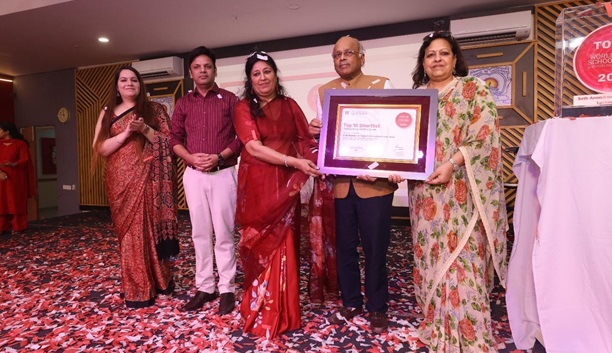
 Lucknow’s Seth Anandram Jaipuria School Among World’s Top 10 Schools in Prestigious Global Education Awards